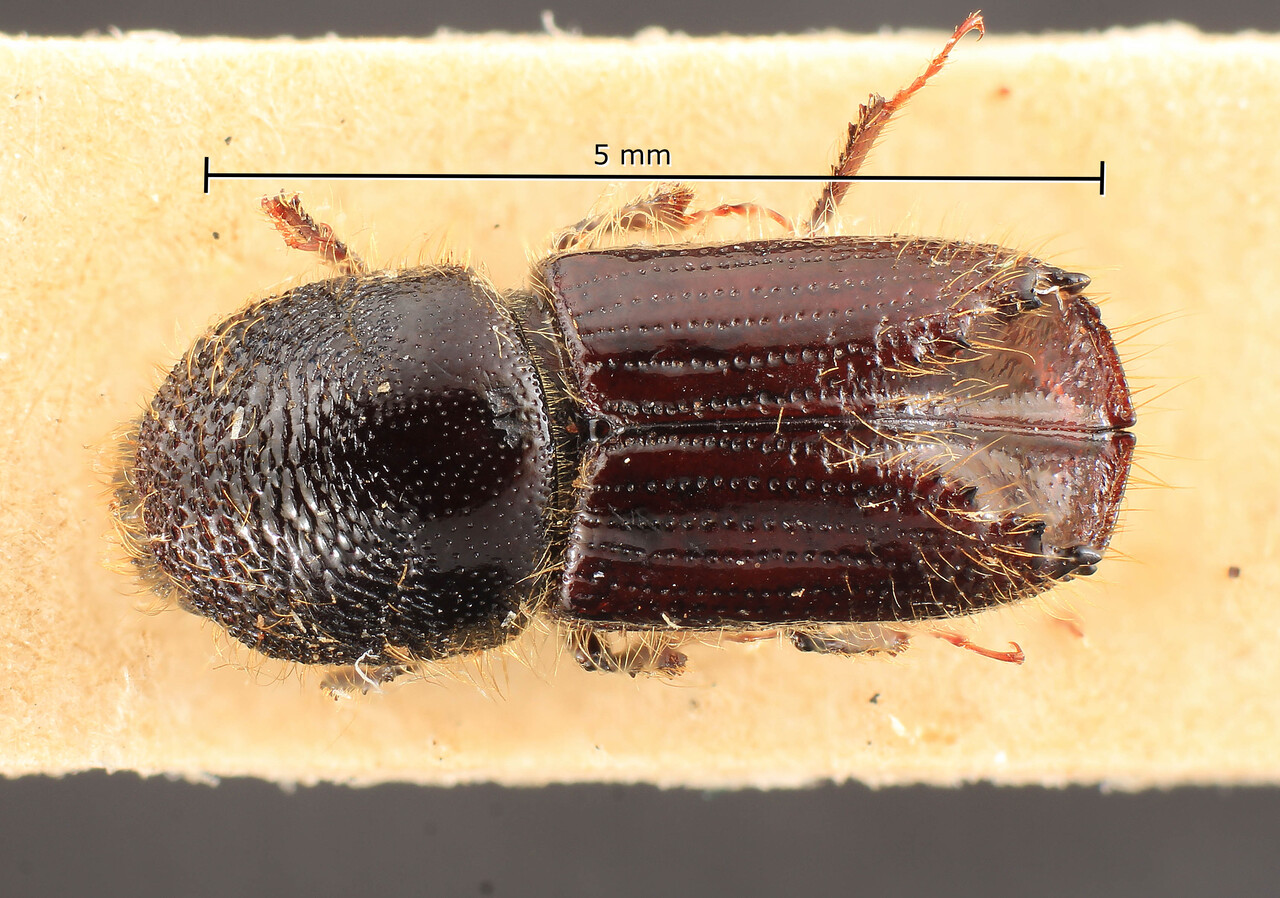
Ips shangrila
Ips subelongatus
Stauffer et al. (2001), on the basis of mitochondrial DNA, proposed that Asian populations of what had been considered Ips cembrae (Heer) should be treated as Ips subelongatus (Motschulsky). This suggestion was followed by Bright & Skidmore (2002) and Knížek (2011). Stauffer et al. (2001) only sampled 3 populations in southern Sibera, Heilonjiang (China) and Hokkaido (Japan) and suggested that further work was needed to determine the identity of other populations in the far east. Their article did not include any formal taxonomic statements. Knížek (2011) treated most populations from eastern Eurasia as I. subelongatus but also referred some populations to I. cembrae, seeming in contradiction to the conclusions of Staufer et al. (2001). To the best of my knowledge no further genetic work has been published since 2001. Also the type localities of 2 synonyms, shimanoensis Yono (Japan) and fallax (Eggers) (Irkutsk, Sibera) are adjacent to localities treated by Stauffer et al. (2001) as subelongatus, though both are treated as synonyms of cembrae by Knížek (2011).
Read MoreIps calligraphus interstitialis
Ips calligraphus ponderosae
Ips schmutzenhoferi
Ips cribricollis
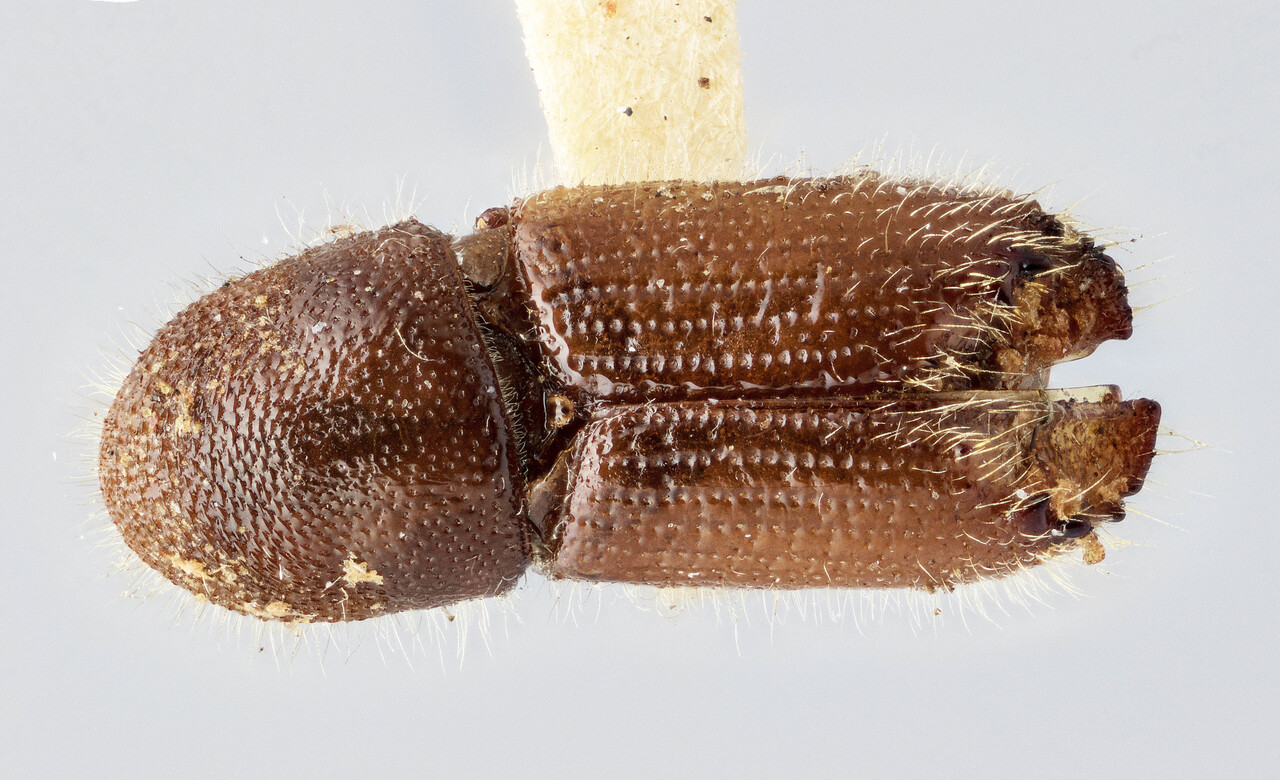
Wood (1982) and Wood & Bright (1992) treat cribricollis as a synonym of grandicollis. Based on genetic and behavioral differences most authors continue to recognize populations from the SW U.S. and Mesoamerica under this name.
Read More